Protected: FGCC (Possible) Misconduct
There is no excerpt because this is a protected post.

There is no excerpt because this is a protected post.
Crime Control Act of 1970
“…It is the purpose of this Act to seek the eradication of organized
crime in the United States by strengthening the legal to0ls in the evidence-gathering process, by establishing new penal prohibitions, and
by providing enhanced sanctions and new remedies to deal with the
unlawful activities of those engaged in organized crime. …”
“AN ACT
Relating to the control of organized crime in the United States.
Organized Crime ]enacted by the Senate and House of Representatives of the
United States of America in Congress assembled^ That this Act
may be cited as the “Organized Crime Control Act of 1970.”
STAITIMENT OF FINDINGS AND PURPOSE
The (Congress finds that (1) organized crime in the United States
is a highly sophisticated, diversified, and widespread activity that
annually drains billions of dollars from America’s economy by unlawful conduct and the illegal use of force, fraud, and corruption;
Larceny:
“The unlawful taking and carrying away of someone else’s personal property with the intent to deprive the possessor of it permanently.”
” The unlawful taking and carrying away of someone else’s personal property with the intent to deprive the possessor of it permanently.”

“…(a) Any person subject to this chapter who wrongfully takes, obtains, or withholds, by any means, from the possession of the owner or of any other person any money, personal property, or article of value of any kind-
(1) with intent permanently to deprive or defraud another person of the use and benefit of property or to appropriate it to his own use or the use of any person other than the owner, steals that property and is guilty of larceny; or
(2) with intent temporarily to deprive or defraud another person of the use and benefit of property or to appropriate it to his own use or the use of any person other than the owner, is guilty of wrongful appropriation. …”
Text contains those laws in effect on November 2, 2024
From Title 10-ARMED FORCES Subtitle A-General Military Law PART II-PERSONNEL CHAPTER 47-UNIFORM CODE OF MILITARY JUSTICE SUB CHAPTER X-PUNITIVE ARTICLES
(a) Any person subject to this chapter who wrongfully takes, obtains, or withholds, by any means, from the possession of the owner or of any other person any money, personal property, or article of value of any kind-
(1) with intent permanently to deprive or defraud another person of the use and benefit of property or to appropriate it to his own use or the use of any person other than the owner, steals that property and is guilty of larceny; or
(2) with intent temporarily to deprive or defraud another person of the use and benefit of property or to appropriate it to his own use or the use of any person other than the owner, is guilty of wrongful appropriation.
(b) Any person found guilty of larceny or wrongful appropriation shall be punished as a court-martial may direct.
(Aug. 10, 1956, ch. 1041, 70A Stat. 73 .)
| Revised section | Source (U.S. Code) | Source (Statutes at Large) |
|---|---|---|
| 921(a)921(b) | 50:715(a).50:715(b). | May 5, 1950, ch. 169, §1 (Art. 121), 64 Stat. 140 . |
In subsection (a), the words “whatever” and “true” are omitted as surplusage. The word “it” is substituted for the words “the same” in clauses (1) and (2).
“Administrative Procedure
Act”:
“To improve the administration of justice by prescribing fair
administrative procedure”:
“No subsequent legislation shall
be held to supersede or modify the provisions of this Act except to
the extent that such legislation shall do so expressly”
ADMINISTRATIVE PROCEDURE ACT
[PUBLIC LAW 404—79TH CONGRESS]
[CHAPTER 324—2D SESSION]
[S. 7]
AN ACT To improve the administration of justice by prescribing fair
administrative procedure
Be it enacted by the Senate and House of Representatives of the
United States of America in Congress assembled,
TITLE
SECTION 1. This Act may be cited as the “Administrative Procedure
Act”.
After President Woodrow Wilson signed the Federal Trade Commission Act into law in 1914,
The FTC opened its doors on March 16,1915.

FR Document:2024-25024 Citation:89 FR 89216 PDF Pages 89216-89414 (199 pages) Permalink
“embezzlement, n. The fraudulent taking of personal property with which one has been entrusted, esp. as a fiduciary. • The criminal intent for embezzlement — unlike larceny and false pretenses – arises after taking possession (not before or during the taking). — Also termed defalcation; peculation. See LARCENY; FALSE PRETENSES. — embez-zle, ub. — embezzler, n.”
“embezzlement, n. The fraudulent taking of personal property with which one has been entrusted, esp. as a fiduciary. • The criminal intent for embezzlement — unlike larceny and false pretenses – arises after taking possession (not before or during the taking). — Also termed defalcation; peculation. See LARCENY; FALSE PRETENSES. — embez-zle, ub. — embezzler, n.”
depeculation:
“Embezzlement from the public treasury.”
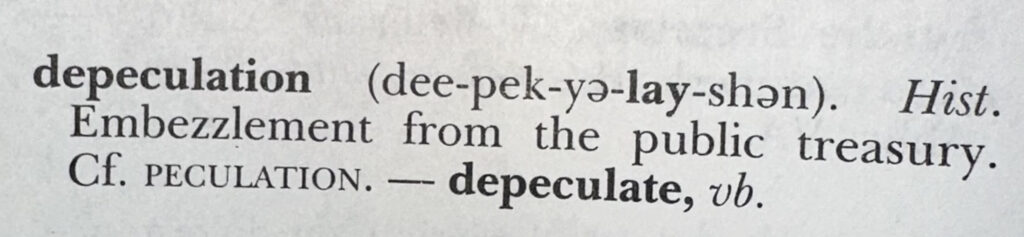
“depeculation (dee-pek-ya-lay-shan). Hist.
Embezzlement from the public treasury.
Cf. PECULATION. — depeculate, ub.”
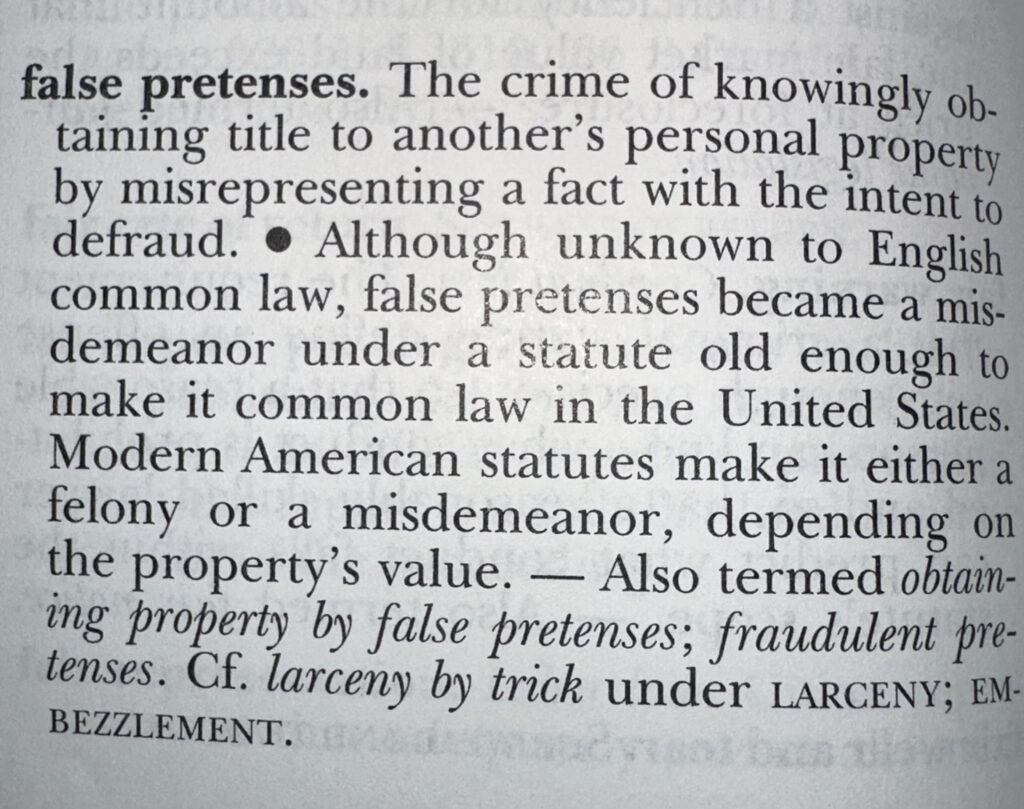
“false pretenses: The crime of knowingly obtaining title to another’s personal property by misrepresenting a fact with the intent to defraud. “
“false pretenses. The crime of knowingly obtaining title to another’s personal property by misrepresenting a fact with the intent to defraud. • Although unknown to English common law, false pretenses became a misdemeanor under a statute old enough to make it common law in the United States.
Modern American statutes make it either a felony or a misdemeanor, depending on the property’s value. — Also termed obtaining property by false pretenses; fraudulent pretenses. Cf. larceny by trick under LARCENY; EMBEZZLEMENT.”
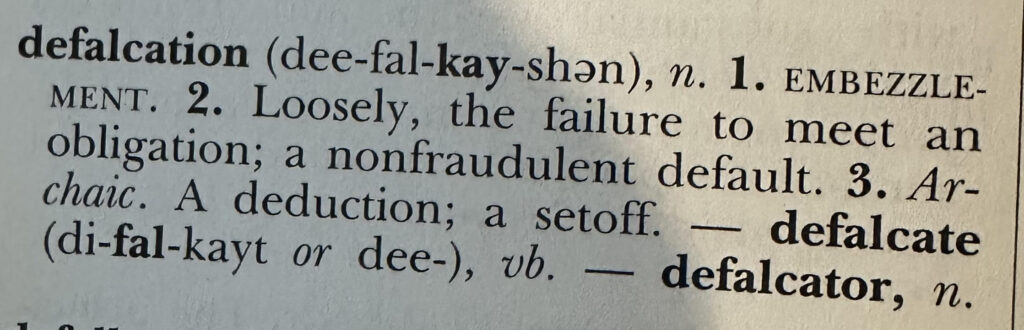
“defalcation (dee-fal-kay-shan), n. 1. EMBEZZLE-MENT. 2. Loosely, the failure to meet an obligation; a nonfraudulent default. 3. Ar-chaic. A deduction; a setoff. …”
“defalcation (dee-fal-kay-shan), n. 1. EMBEZZLE-MENT. 2. Loosely, the failure to meet an obligation; a nonfraudulent default. 3. Ar-chaic. A deduction; a setoff. – defalcate (di-fal-kayt or dee-), vb. – defalcator, n.”
12 th Amendment of the United States Constitution:
“The person having the greatest number of votes for President, shall be the President, if such number be a majority of the whole number of Electors appointed; and if no person have such majority, then from the persons having the highest numbers not exceeding three on the list of those voted for as President, the House of Representatives shall choose immediately, by ballot, the President. But in choosing the President, the votes shall be taken by states, the representation from each state having one vote”
“The Electors shall meet in their respective states and vote by ballot for President and Vice-President, one of whom, at least, shall not be an inhabitant of the same state with themselves; they shall name in their ballots the person voted for as President, and in distinct ballots the person voted for as Vice-President, and they shall make distinct lists of all persons voted for as President, and of all persons voted for as Vice-President, and of the number of votes for each, which lists they shall sign and certify, and transmit sealed to the seat of the government of the United States, directed to the President of the Senate; — The President of the Senate shall, in the presence of the Senate and House of Representatives, open all the certificates and the votes shall then be counted; — The person having the greatest number of votes for President, shall be the President, if such number be a majority of the whole number of Electors appointed; and if no person have such majority, then from the persons having the highest numbers not exceeding three on the list of those voted for as President, the House of Representatives shall choose immediately, by ballot, the President. But in choosing the President, the votes shall be taken by states, the representation from each state having one vote; a quorum for this purpose shall consist of a member or members from two-thirds of the states, and a majority of all the states shall be necessary to a choice. And if the House of Representatives shall not choose a President whenever the right of choice shall devolve upon them, before the fourth day of March next following, then the Vice-President shall act as President, as in case of the death or other constitutional disability of the President.– The person having the greatest number of votes as Vice-President, shall be the Vice-President, if such number be a majority of the whole number of Electors appointed, and if no person have a majority, then from the two highest numbers on the list, the Senate shall choose the Vice-President; a quorum for the purpose shall consist of two-thirds of the whole number of Senators, and a majority of the whole number shall be necessary to a choice. But no person constitutionally ineligible to the office of President shall be eligible to that of Vice-President of the United States.”
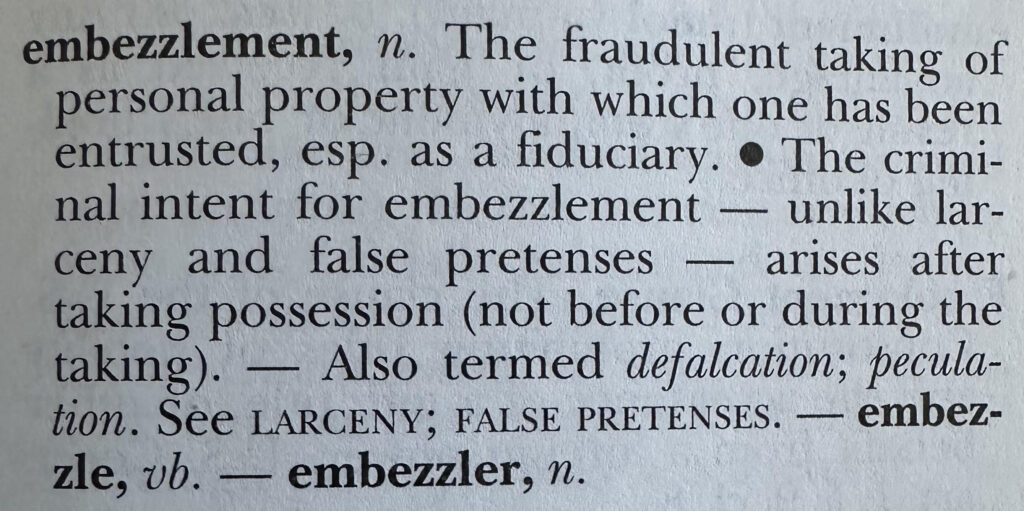
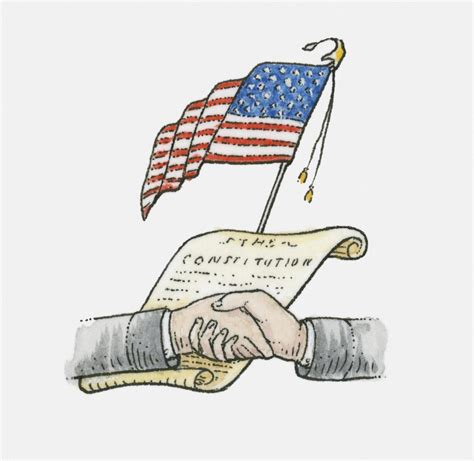
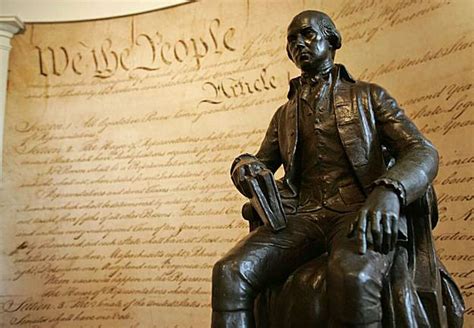
The United States Constitution
Ratified June 21,1788
“We the People of the United States, in Order to form a more perfect Union, establish Justice, insure domestic Tranquility, provide for the common defense, promote the general Welfare, and secure the Blessings of Liberty to ourselves and our Posterity, do ordain and establish this Constitution for the United States of America.”
We the People of the United States, in Order to form a more perfect Union, establish Justice, insure domestic Tranquility, provide for the common defense, promote the general Welfare, and secure the Blessings of Liberty to ourselves and our Posterity, do ordain and establish this Constitution for the United States of America.
All legislative Powers herein granted shall be vested in a Congress of the United States, which shall consist of a Senate and House of Representatives.
Continue reading “United States Constitution”A writ of habeas corpus is a legal order that requires a person who is holding someone in custody to bring the detainee before a court to determine if their detention is lawful. It serves as a protection against unlawful imprisonment, allowing individuals to challenge their detention in court.
The origins of habeas corpus can be traced back to the Magna Carta in 1215, which established that no one should be imprisoned without lawful judgment. The writ has evolved over centuries, becoming a critical tool in both English and American law. It was codified in the Habeas Corpus Act of 1679, which aimed to limit the king’s power to detain individuals without just cause.
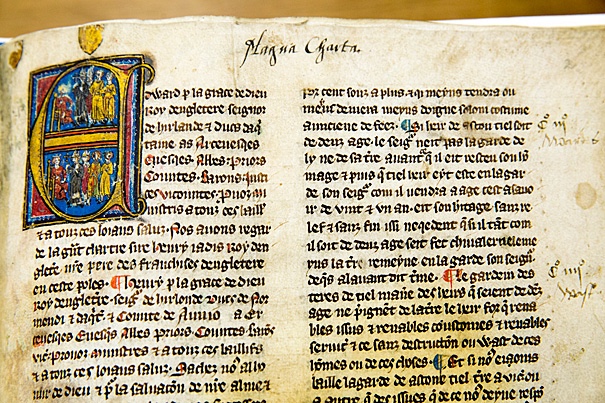
The Magna Carta, also known as the Great Charter, is a foundational document in English history.
It was sealed by King John of England on June 15, 1215, at Runnymede, near Windsor. The charter was created to address the grievances of rebellious barons and to establish certain legal rights.